Vintage A. Mathieson and Sons Marking Gauge - Edinburgh Rosewood & Brass Craftsmanship
Antique 7 1/2" mortise gauge in rosewood and brass.
A. Mathieson & Sons, Edinburgh
Age unknown, possibly Late 19th to early 20th Century
Width 7 1/2" (19cm)
Height 2 1/2" (6.5cm)
Depth 2 1/2" (6.5cm)
A beautiful vintage marking gauge by A. Mathieson & Sons of Edinburgh, featuring traditional rosewood and brass construction. This elegant precision tool showcases the exceptional craftsmanship that made Mathieson one of Scotland’s most celebrated edge tool manufacturers.
The gauge features a solid rosewood stock with beautiful grain and warm patina developed over decades. The brass wear strip protects the sliding stem channel, while the brass thumbscrew provides secure locking at any position. The steel stem shows clear maker’s markings, and the hardened steel marking pin remains sharp. The contrasting dark rosewood and gleaming brass create a tool that’s as beautiful as it is functional.
Alexander Mathieson & Son (later & Sons) was one of Scotland’s premier edge tool manufacturers, established in Glasgow in 1792 before relocating to Edinburgh. For over 150 years, Mathieson produced some of the finest chisels, planes, and marking tools in Britain, earning a reputation that rivaled even the celebrated Sheffield makers. The company’s tools were exported throughout the British Empire and remain highly prized by collectors and craftsmen today.
Mathieson was particularly renowned for their attention to detail and use of premium materials. The rosewood used for this gauge’s stock wasn’t merely decorative - rosewood’s density, stability, and fine grain made it ideal for precision tools. The wood wouldn’t compress or wear unevenly, ensuring the gauge remained accurate throughout decades of use. The brass wear strip protecting the stem channel demonstrates Mathieson’s thoughtful engineering, preventing wear that would compromise accuracy over time.
Marking gauges are fundamental layout tools that have been used for centuries. The gauge scribes a line parallel to an edge - essential for marking joints, setting mortise positions, establishing consistent setbacks, and countless other layout tasks. Before pencils became common in workshops, the scribed line from a marking gauge was the primary way craftsmen transferred measurements and established reference lines on timber.
The sliding stem design allows infinite adjustment within its range, making this a remarkably versatile tool. The craftsman would set the desired distance from the stock to the pin, lock it with the thumbscrew, then run the stock along the edge of the workpiece while the pin scribed a fine, precise line. The scribed line wouldn’t smudge or fade like pencil marks and provided a physical reference that could be felt as well as seen - important when working with hand tools.
Mathieson’s Edinburgh workshops were located in the heart of Scotland’s furniture-making and joinery trades. Scottish cabinetmakers were renowned for their skill, and they demanded the finest tools. A Mathieson gauge wasn’t just a measuring tool - it was a precision instrument that a craftsman might use thousands of times throughout their career, knowing it would remain accurate and reliable.
The brass thumbscrew on this gauge is a quality feature. Cheaper gauges used wooden wedges that could split or lose their grip. The brass thumbscrew provides positive, reliable locking that won’t damage the stem and allows for quick, precise adjustments. The fine threading gives excellent control when setting measurements.
Edinburgh’s toolmaking tradition, while less famous than Sheffield’s, produced some of Britain’s finest precision instruments. Mathieson tools were the choice of discerning craftsmen who understood that accuracy in layout translated directly to quality in finished work. A door that hung perfectly, joints that fitted seamlessly, and furniture that remained square for generations all began with precise layout using tools like this gauge.
Excellent vintage condition with beautiful original patina. Rosewood stock retains rich color and grain with natural aging. Brass components show honest wear but remain fully functional. Maker’s mark clearly visible and legible. Thumbscrew operates smoothly. Steel pin sharp and ready for use. A fine example of Edinburgh craftsmanship.
Has been lightly cleaned, finished with linseed oil, to keep the original patina.
Aged related marks and wear, but in good orginal condition. Marked with the previous owners name 'G.Blyth'.
All items where appropriate will be sent well packaged, tracked and insured.
Where possible we will combine purchases for shipping. Total weigh approx. 0.2Kg.
Antique 7 1/2" mortise gauge in rosewood and brass.
A. Mathieson & Sons, Edinburgh
Age unknown, possibly Late 19th to early 20th Century
Width 7 1/2" (19cm)
Height 2 1/2" (6.5cm)
Depth 2 1/2" (6.5cm)
A beautiful vintage marking gauge by A. Mathieson & Sons of Edinburgh, featuring traditional rosewood and brass construction. This elegant precision tool showcases the exceptional craftsmanship that made Mathieson one of Scotland’s most celebrated edge tool manufacturers.
The gauge features a solid rosewood stock with beautiful grain and warm patina developed over decades. The brass wear strip protects the sliding stem channel, while the brass thumbscrew provides secure locking at any position. The steel stem shows clear maker’s markings, and the hardened steel marking pin remains sharp. The contrasting dark rosewood and gleaming brass create a tool that’s as beautiful as it is functional.
Alexander Mathieson & Son (later & Sons) was one of Scotland’s premier edge tool manufacturers, established in Glasgow in 1792 before relocating to Edinburgh. For over 150 years, Mathieson produced some of the finest chisels, planes, and marking tools in Britain, earning a reputation that rivaled even the celebrated Sheffield makers. The company’s tools were exported throughout the British Empire and remain highly prized by collectors and craftsmen today.
Mathieson was particularly renowned for their attention to detail and use of premium materials. The rosewood used for this gauge’s stock wasn’t merely decorative - rosewood’s density, stability, and fine grain made it ideal for precision tools. The wood wouldn’t compress or wear unevenly, ensuring the gauge remained accurate throughout decades of use. The brass wear strip protecting the stem channel demonstrates Mathieson’s thoughtful engineering, preventing wear that would compromise accuracy over time.
Marking gauges are fundamental layout tools that have been used for centuries. The gauge scribes a line parallel to an edge - essential for marking joints, setting mortise positions, establishing consistent setbacks, and countless other layout tasks. Before pencils became common in workshops, the scribed line from a marking gauge was the primary way craftsmen transferred measurements and established reference lines on timber.
The sliding stem design allows infinite adjustment within its range, making this a remarkably versatile tool. The craftsman would set the desired distance from the stock to the pin, lock it with the thumbscrew, then run the stock along the edge of the workpiece while the pin scribed a fine, precise line. The scribed line wouldn’t smudge or fade like pencil marks and provided a physical reference that could be felt as well as seen - important when working with hand tools.
Mathieson’s Edinburgh workshops were located in the heart of Scotland’s furniture-making and joinery trades. Scottish cabinetmakers were renowned for their skill, and they demanded the finest tools. A Mathieson gauge wasn’t just a measuring tool - it was a precision instrument that a craftsman might use thousands of times throughout their career, knowing it would remain accurate and reliable.
The brass thumbscrew on this gauge is a quality feature. Cheaper gauges used wooden wedges that could split or lose their grip. The brass thumbscrew provides positive, reliable locking that won’t damage the stem and allows for quick, precise adjustments. The fine threading gives excellent control when setting measurements.
Edinburgh’s toolmaking tradition, while less famous than Sheffield’s, produced some of Britain’s finest precision instruments. Mathieson tools were the choice of discerning craftsmen who understood that accuracy in layout translated directly to quality in finished work. A door that hung perfectly, joints that fitted seamlessly, and furniture that remained square for generations all began with precise layout using tools like this gauge.
Excellent vintage condition with beautiful original patina. Rosewood stock retains rich color and grain with natural aging. Brass components show honest wear but remain fully functional. Maker’s mark clearly visible and legible. Thumbscrew operates smoothly. Steel pin sharp and ready for use. A fine example of Edinburgh craftsmanship.
Has been lightly cleaned, finished with linseed oil, to keep the original patina.
Aged related marks and wear, but in good orginal condition. Marked with the previous owners name 'G.Blyth'.
All items where appropriate will be sent well packaged, tracked and insured.
Where possible we will combine purchases for shipping. Total weigh approx. 0.2Kg.

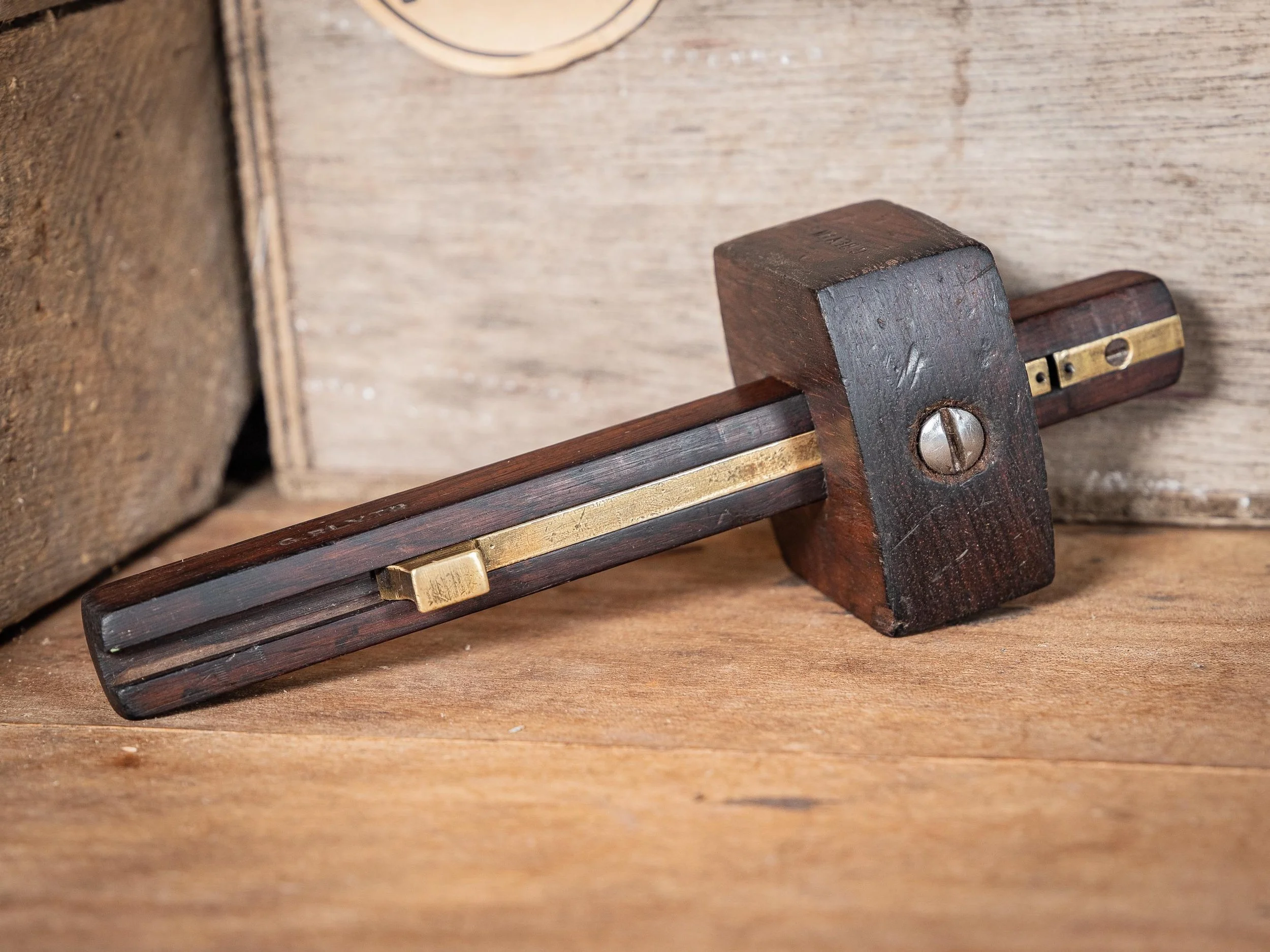 Image 1 of 9
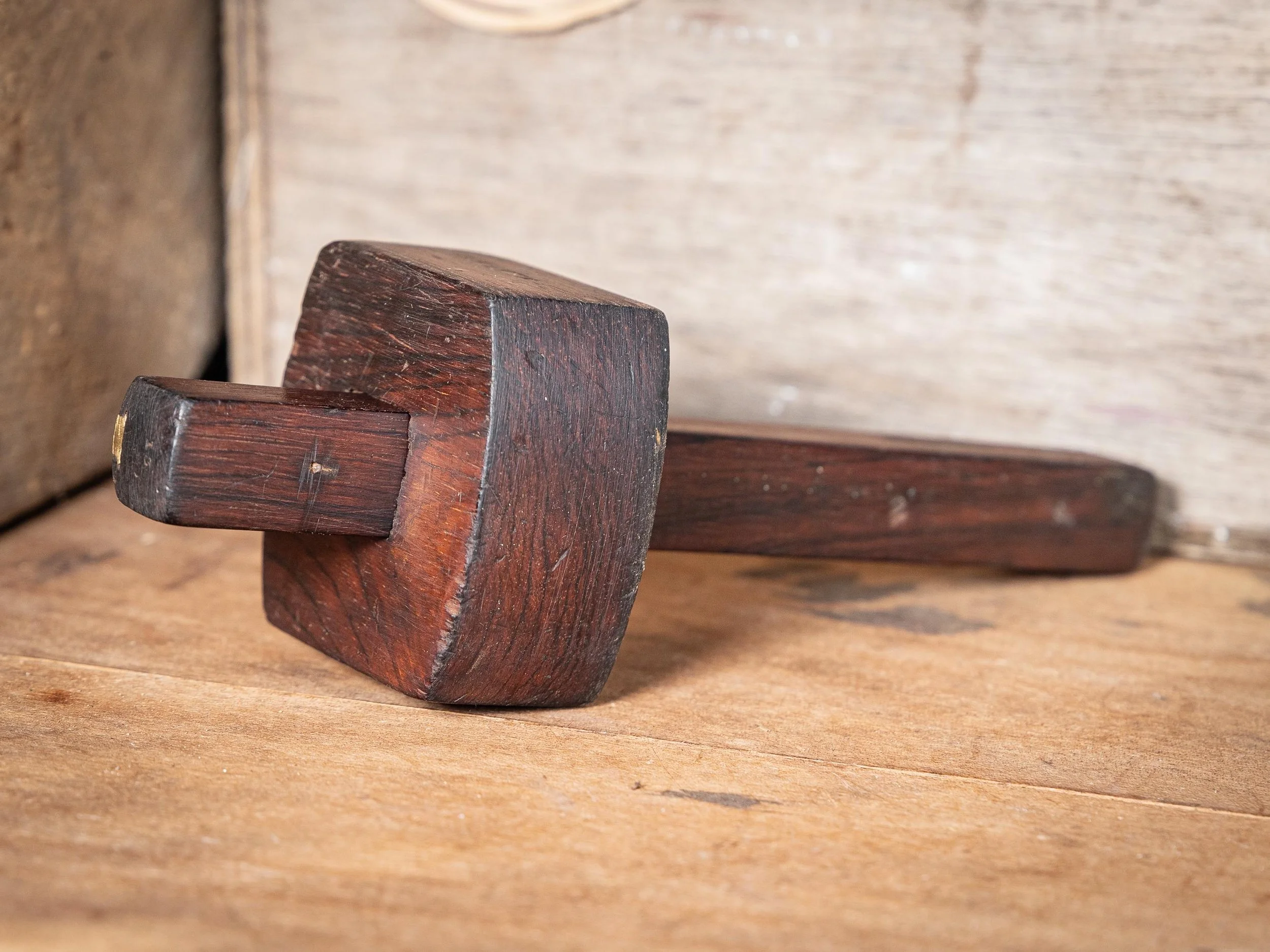 Image 2 of 9
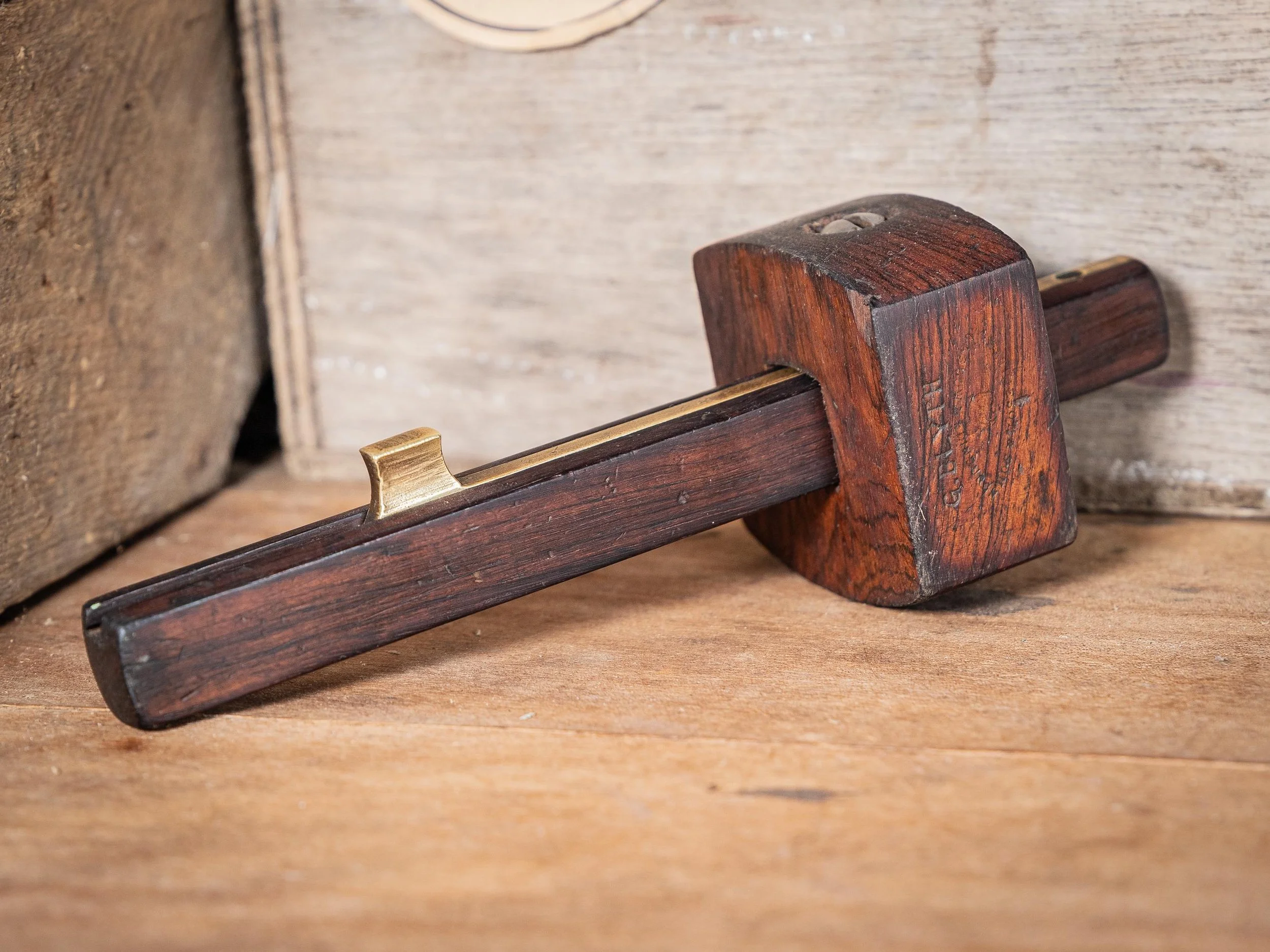 Image 3 of 9
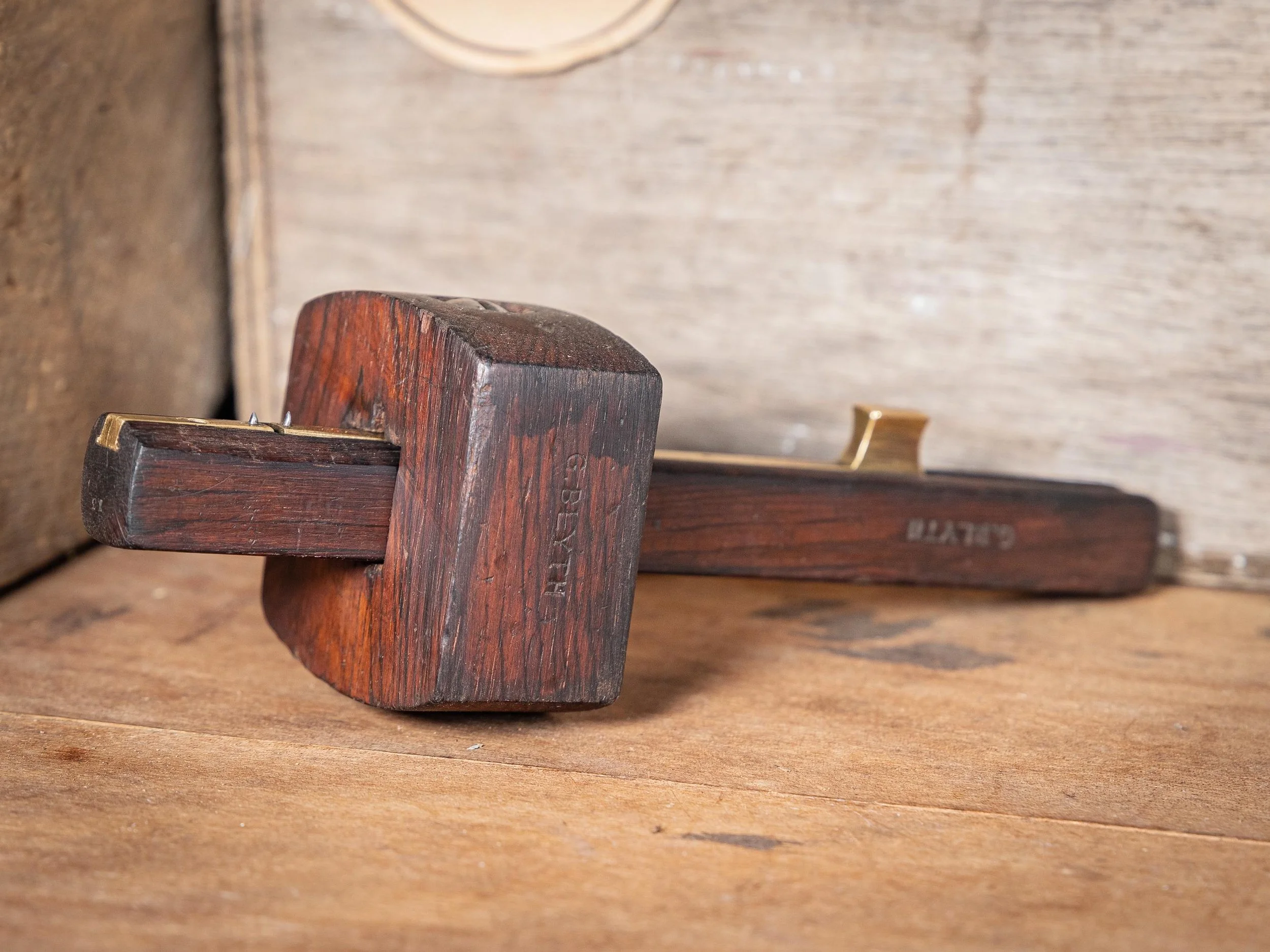 Image 4 of 9
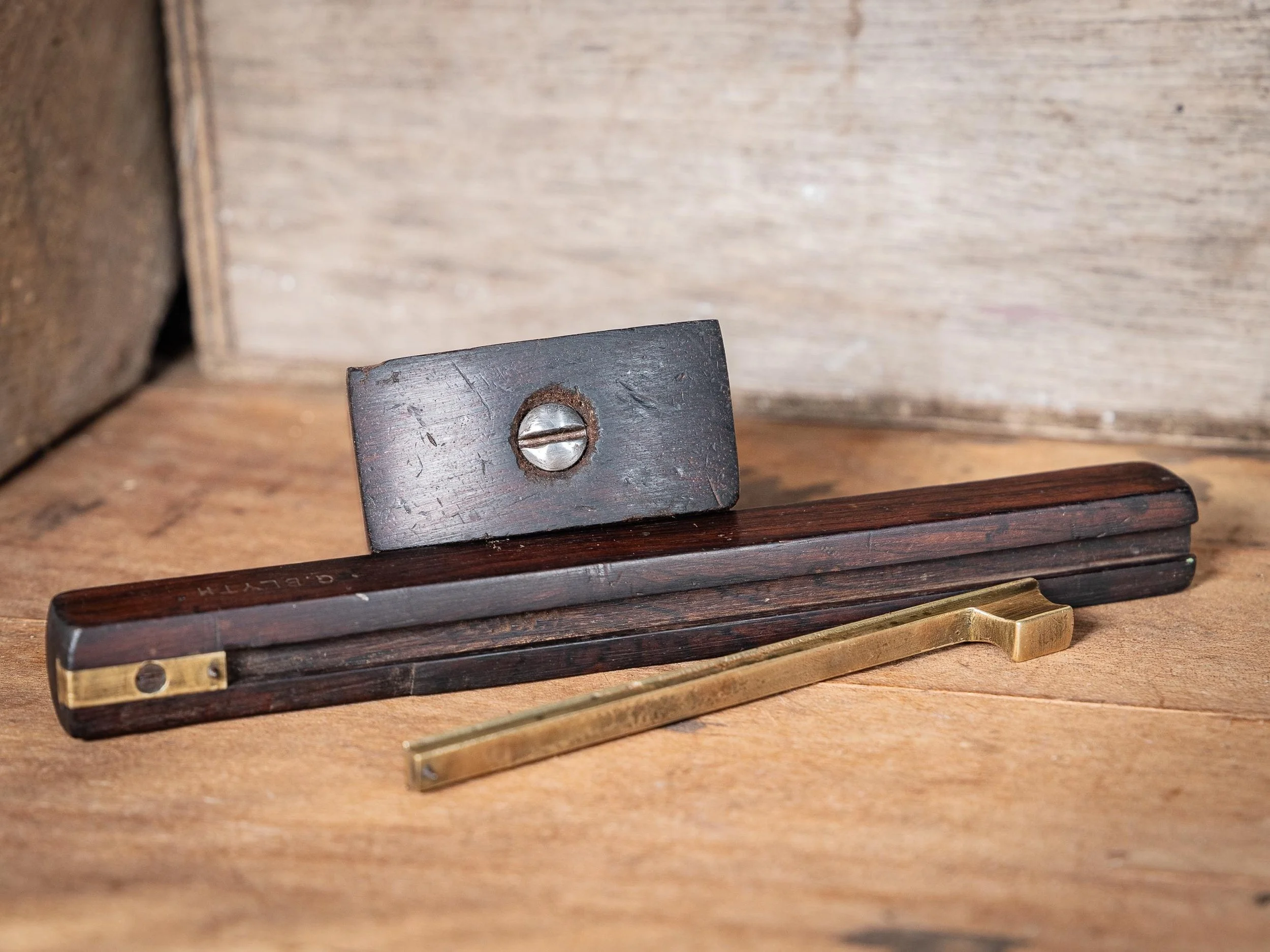 Image 5 of 9
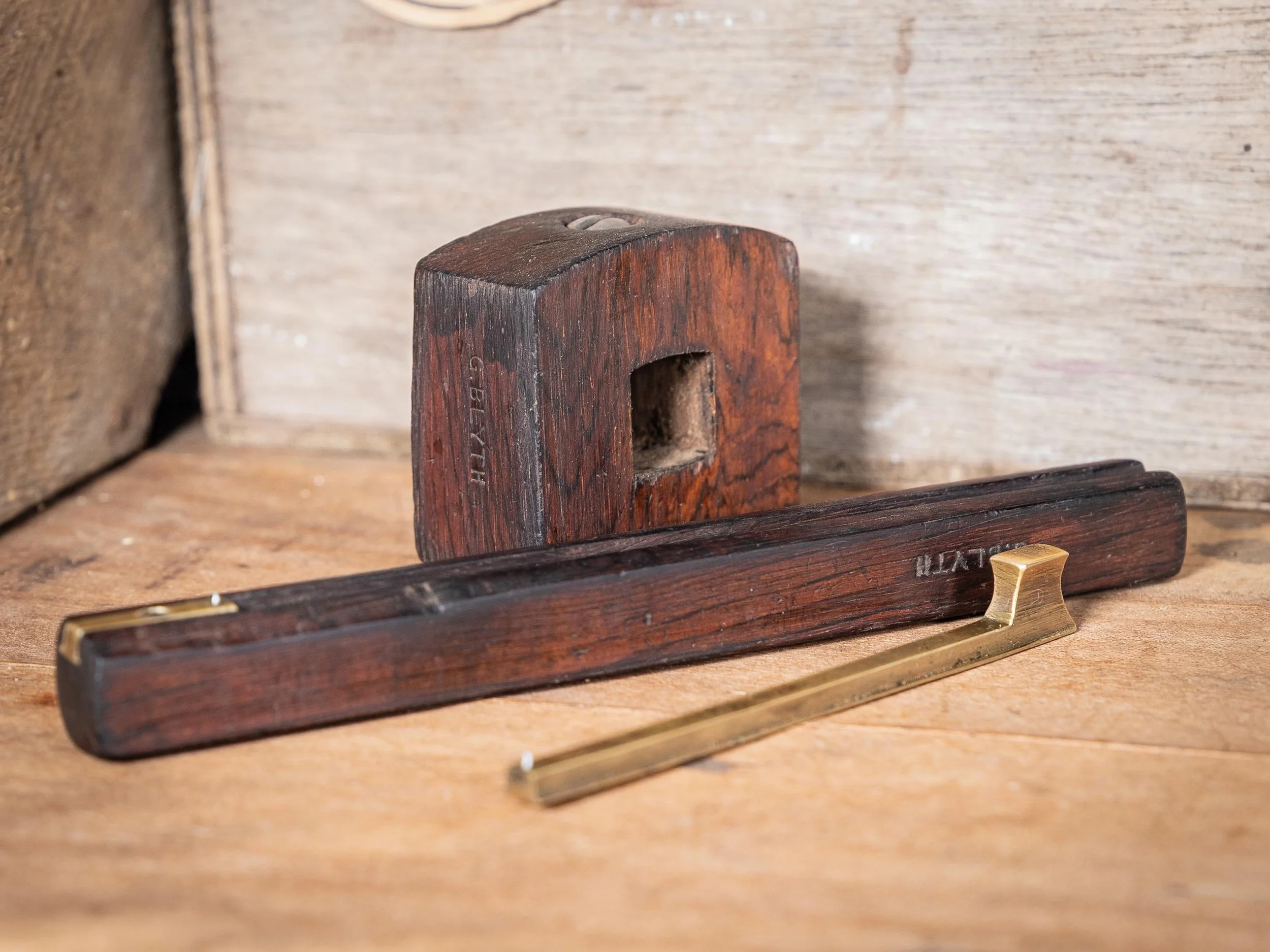 Image 6 of 9
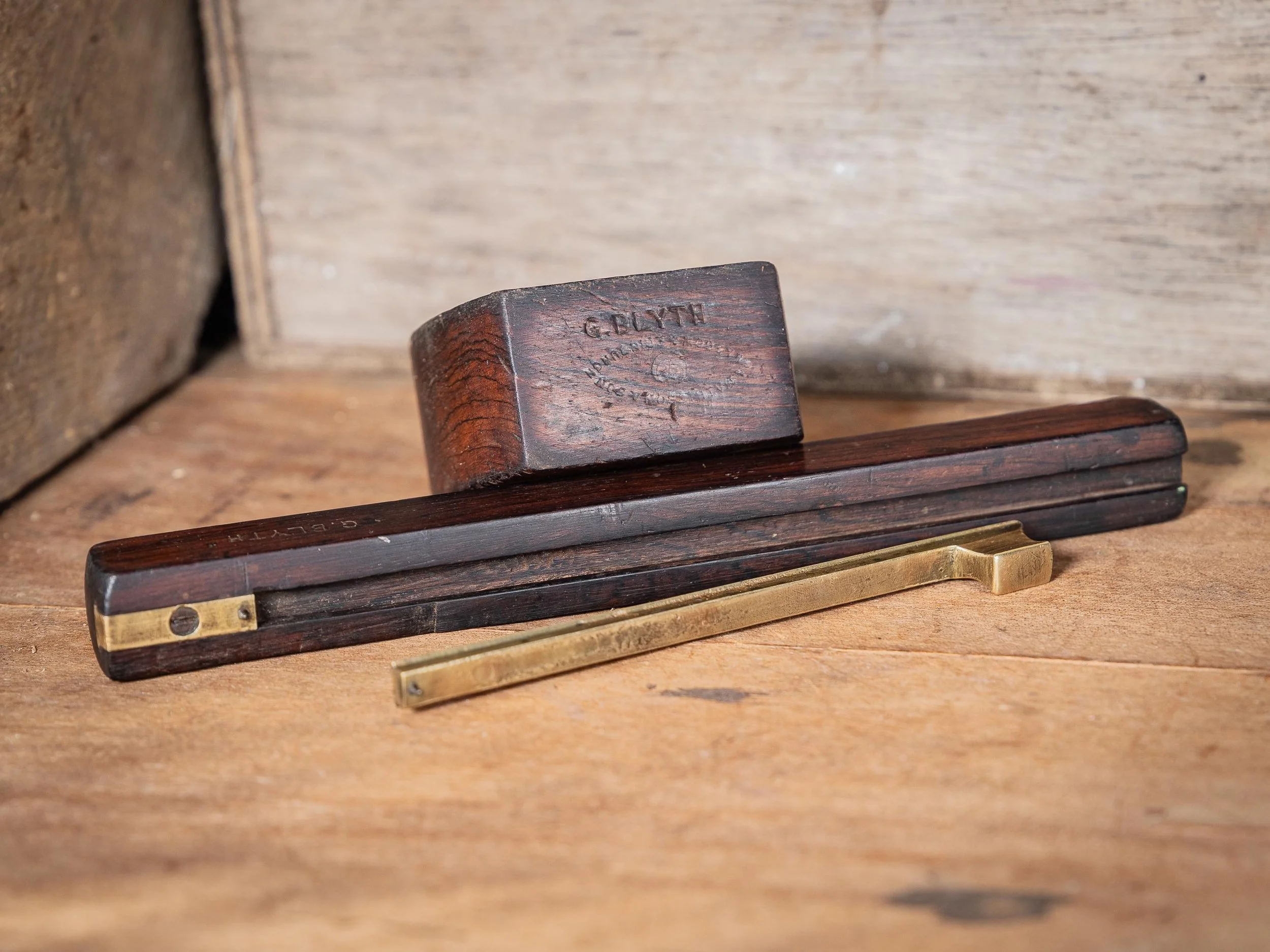 Image 7 of 9
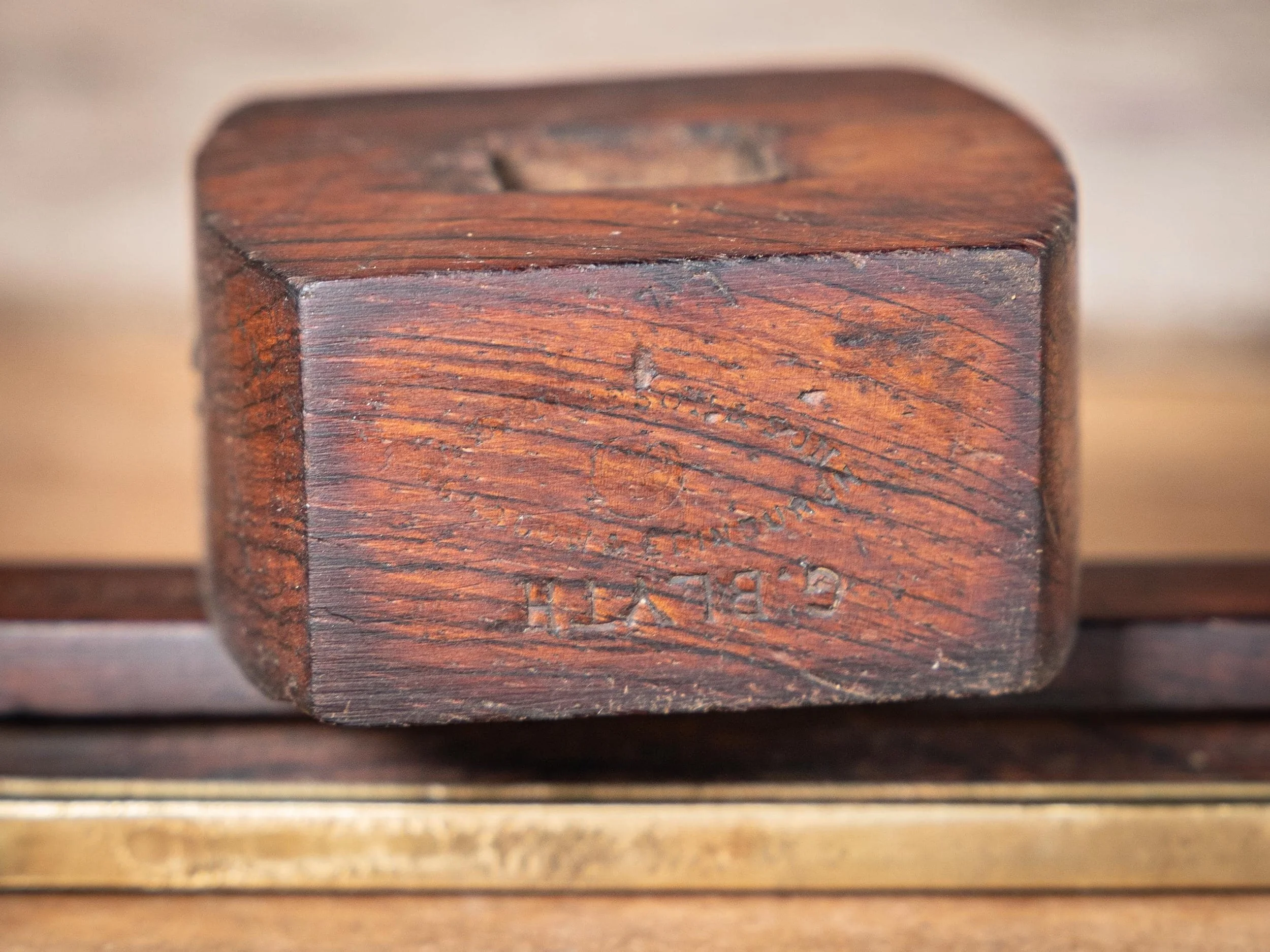 Image 8 of 9
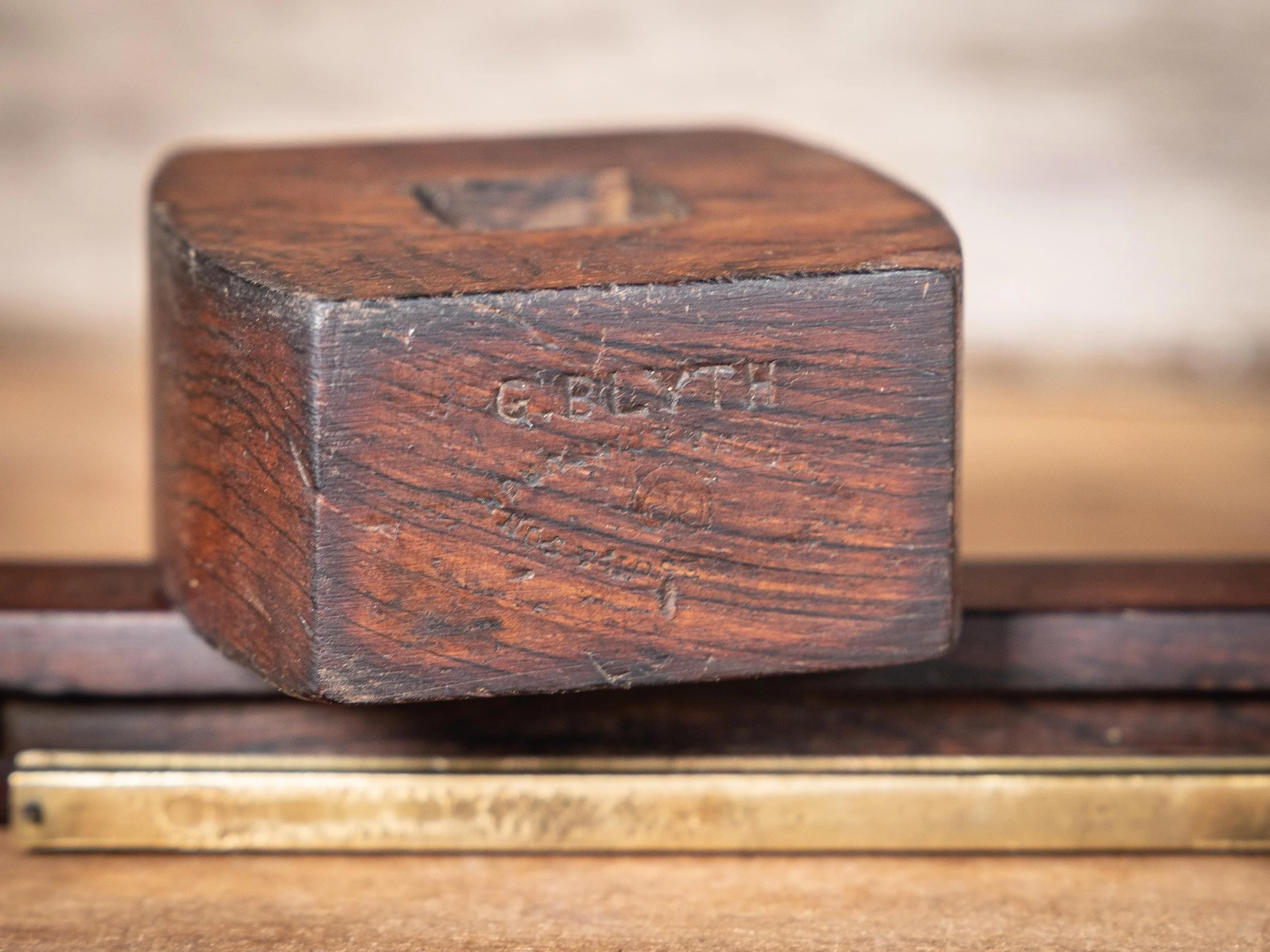 Image 9 of 9